Drink Stations can look similar in a quotation yet create very different experiences at an event. A guest ordering an espresso-based drink watches a cup being made, while someone choosing a cold beverage from a dispenser can often identify the available colours and flavours at a glance. Hot chocolate adds another decision when toppings are part of the presentation. The useful starting point is therefore the serving format, not simply a list of drinks. These examples compare the equipment, menu choices and finishing touches that shape what a guest actually receives.
Drink Stations built around a made-to-order cup
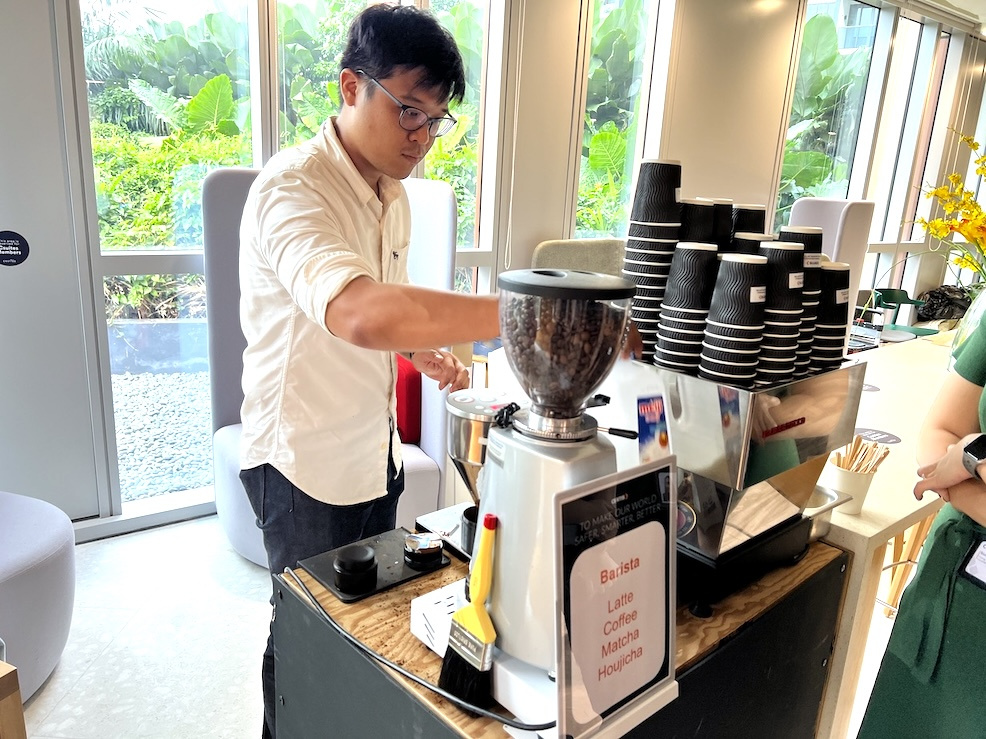
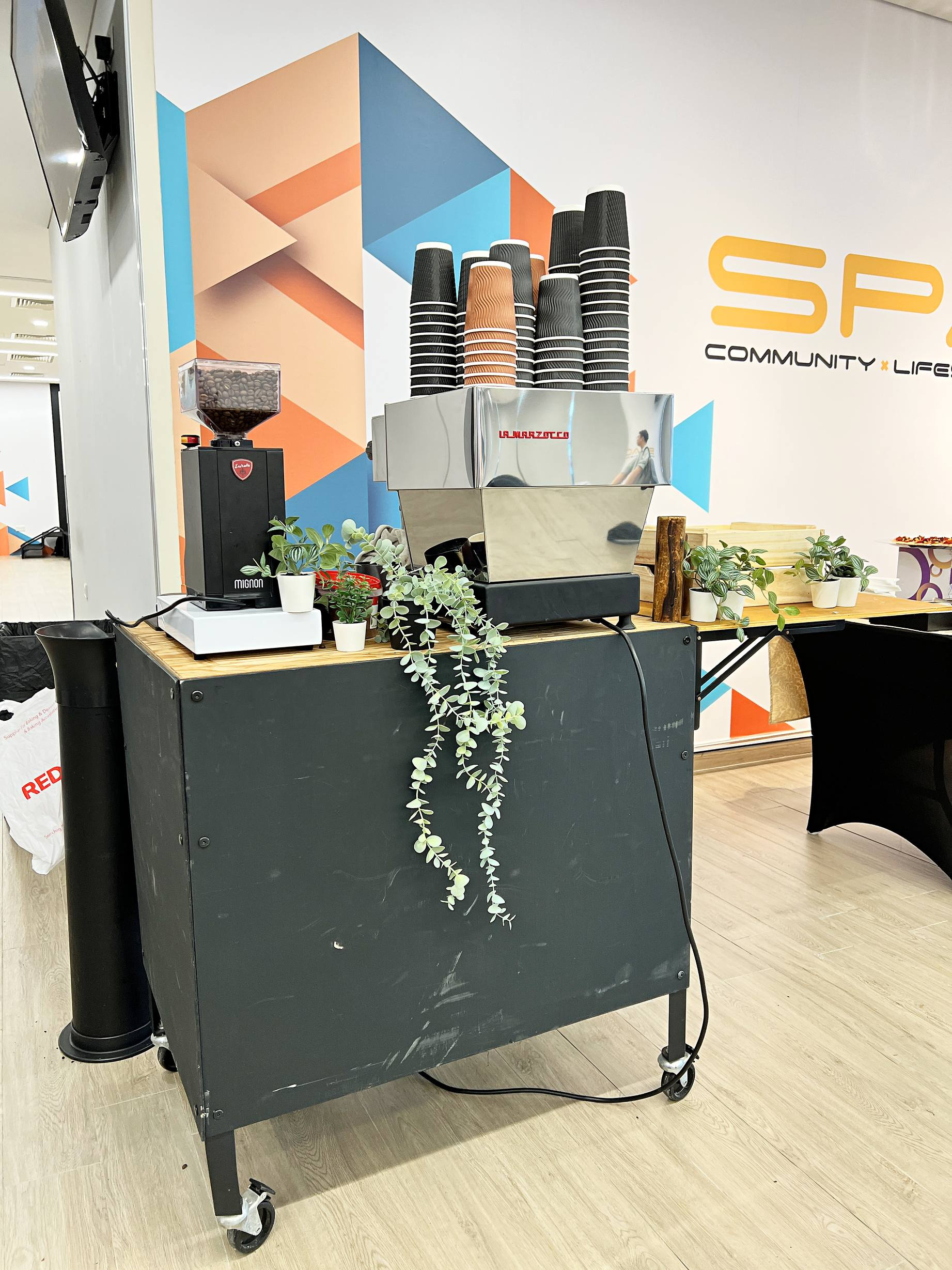
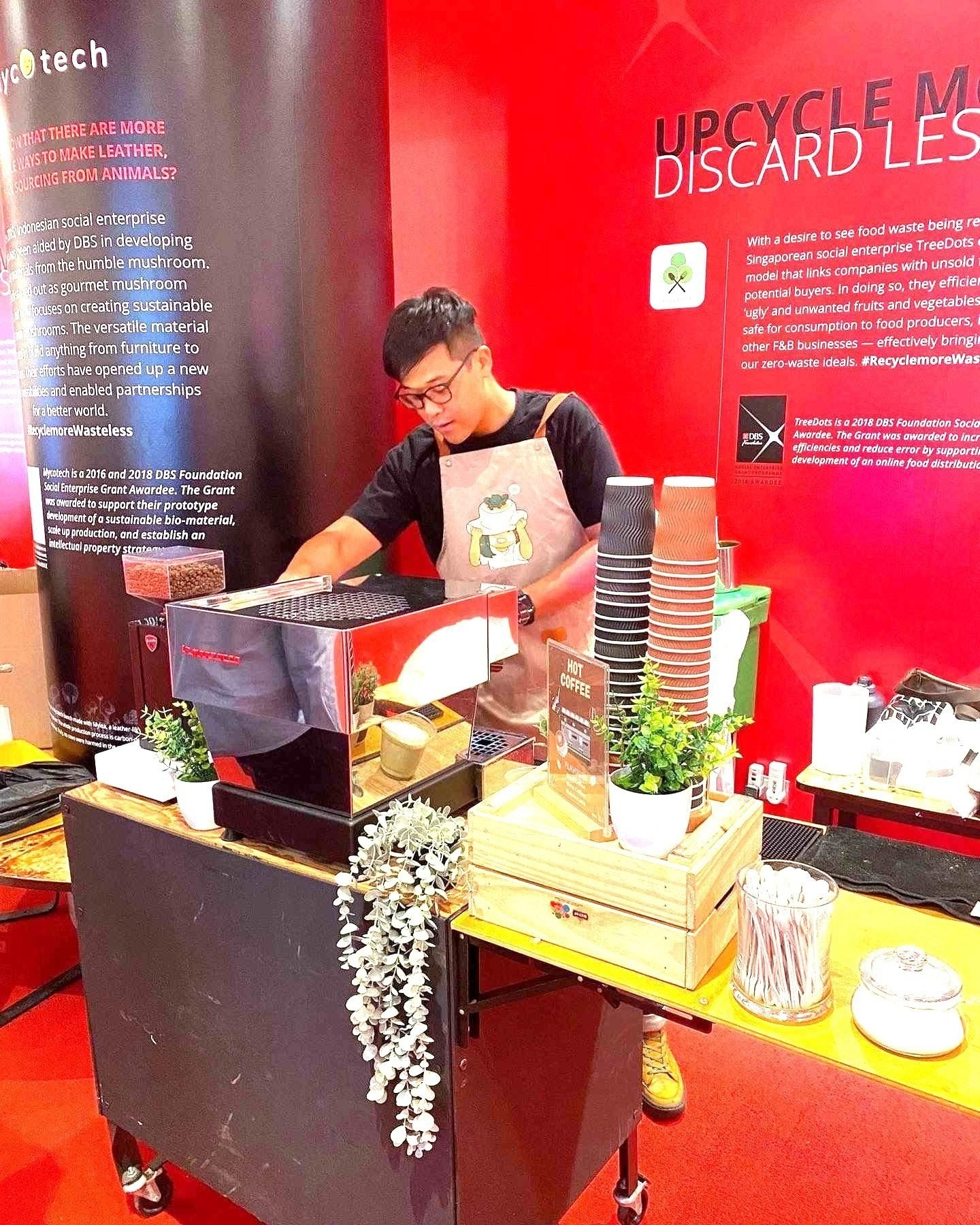
A barista station places preparation at the centre of the experience. The grinder, espresso machine and milk preparation area all have a role, and the visible equipment helps distinguish the counter from a simple beverage table. This format suits occasions where choosing a drink is part of the hospitality. Guests may enjoy watching the process and collecting a cup made for their order, rather than picking up an identical pre-poured drink.
Keep the proposed menu realistic for the service you are booking. Ask which coffee styles are included, whether hot and iced versions are available and how milk choices will be handled. The appearance of a machine in a photograph does not establish its output, operator numbers or package inclusions. Confirm those details separately. The Live Coffee Bar service is a relevant starting point for discussing an espresso-based counter. Share the expected pattern of orders as well as the total guest number, because a short break creates a different demand from a relaxed reception.
An urn station makes the menu easier to see
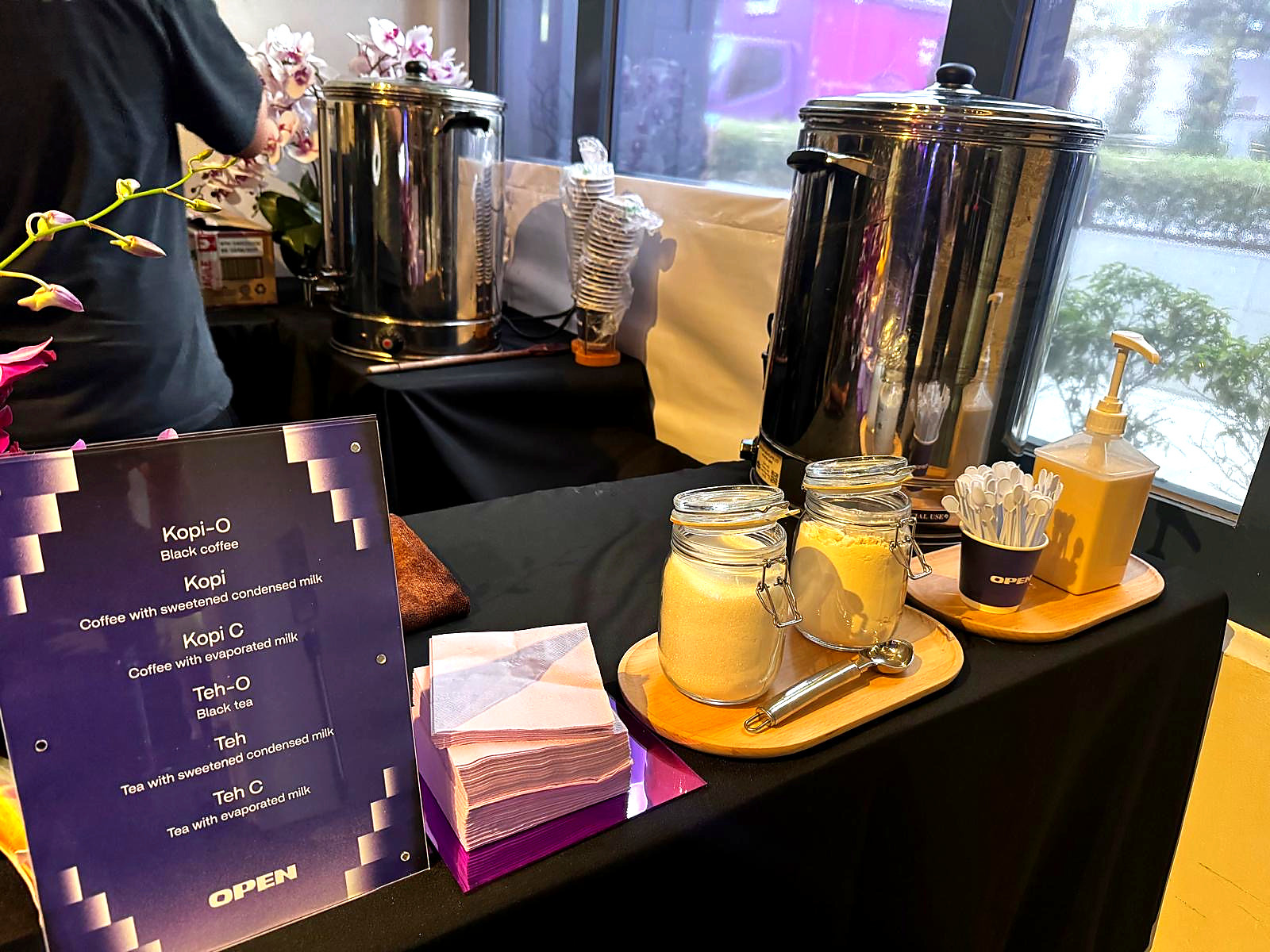
A traditional coffee and tea counter often puts the beverage choices, cups and milk additions in a more direct arrangement. The pictured kopi and teh menu is positioned beside metal urns, with the accompaniments in front. That is a different visual language from a grinder-led coffee bar. It can suit an event that wants a familiar local beverage moment, particularly when the menu is clearly explained to guests who may not know the names of every preparation.
Use the actual drink names and short explanations consistently. If a menu distinguishes black coffee from coffee with milk, the operator and the printed sign should use the same terms. Do not assume that every visible urn contains a different drink or that guests are meant to serve themselves. Establish who pours, where additions are made and what the completed cup includes. These decisions make the menu understandable and prevent the equipment photograph from being mistaken for a full specification of the service.
Hot chocolate can make the finishing step part of the attraction
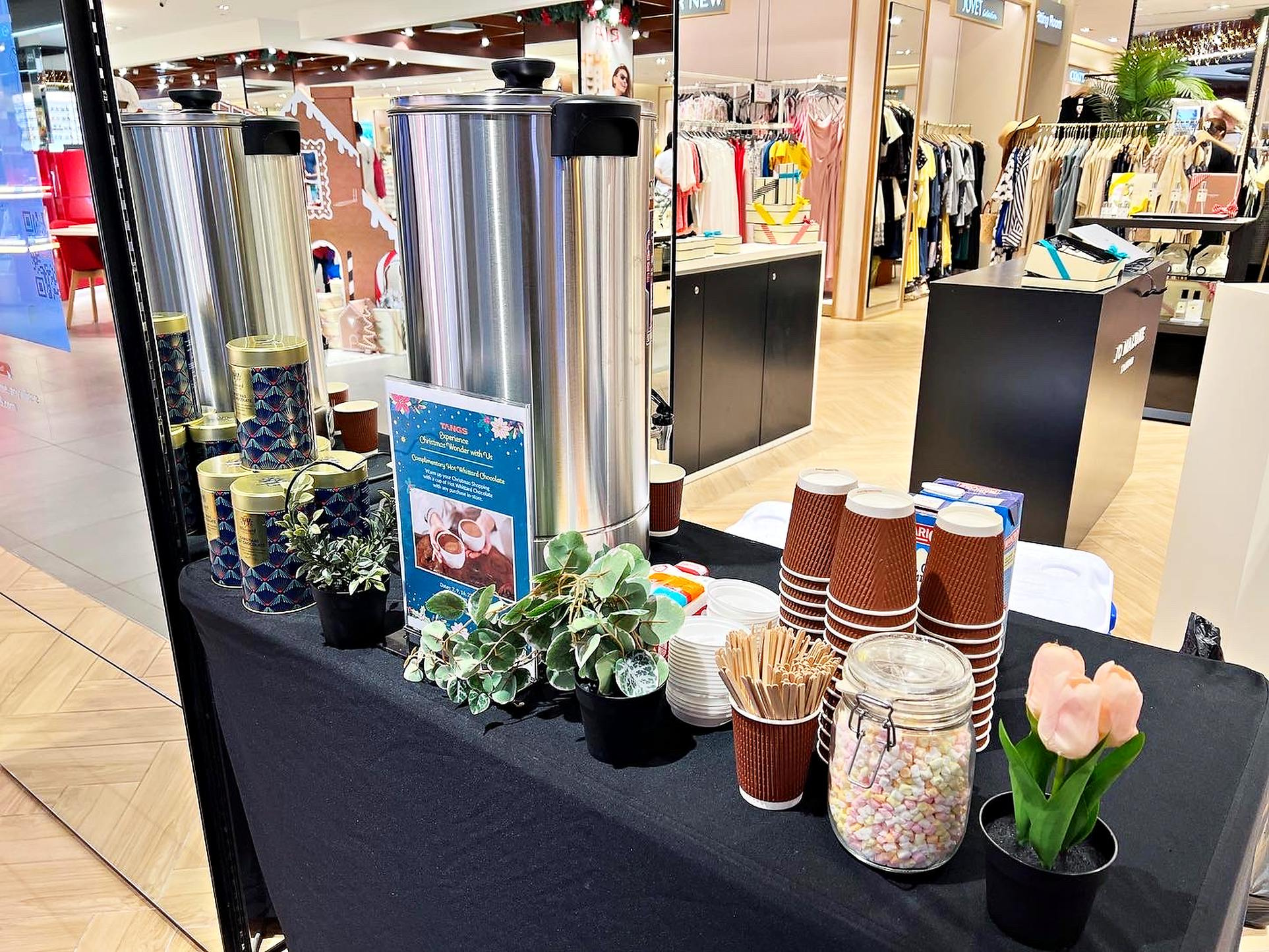
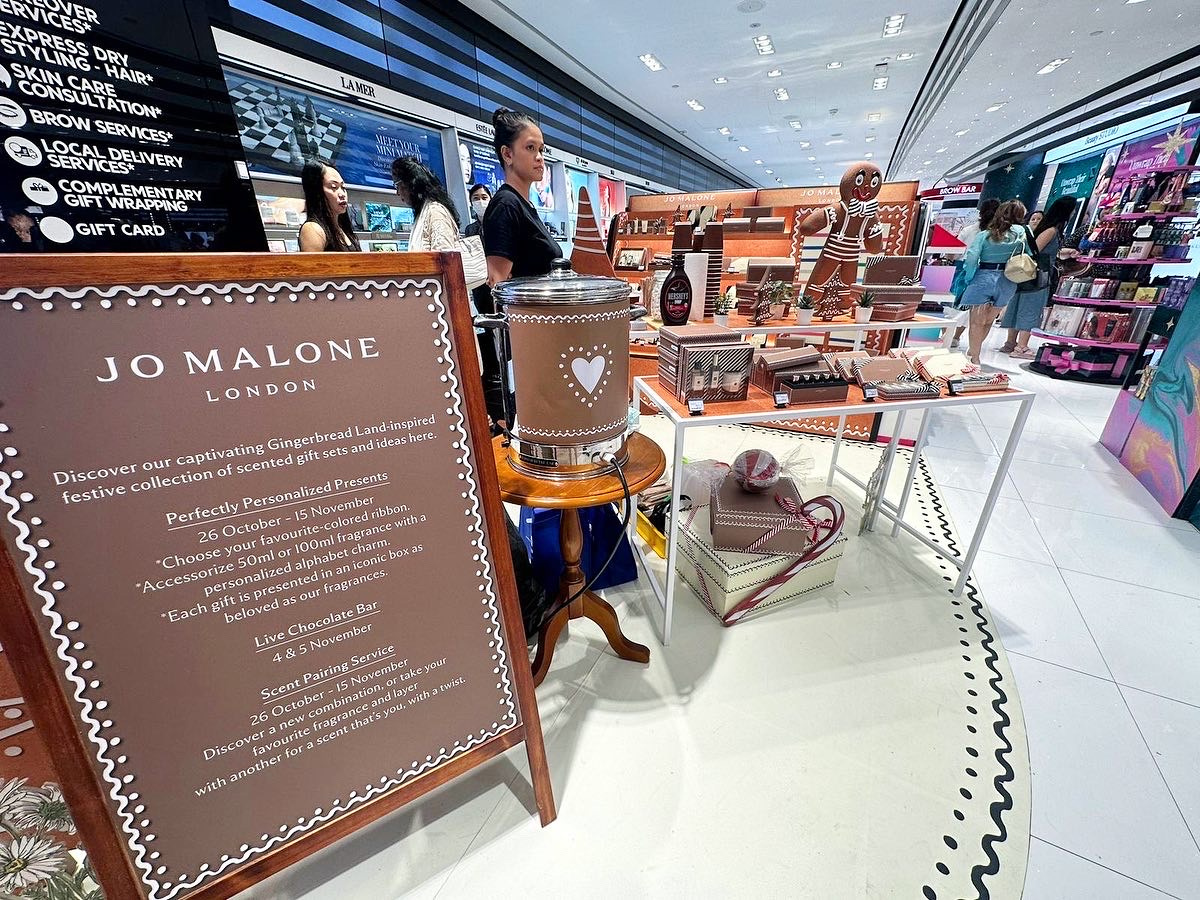
Hot chocolate offers a different kind of choice. The base drink may be prepared in advance, while toppings create the individual finish. In the pictured counter, cups and topping containers sit beside the urns, making the finishing step visible. A concise topping selection can give the display character without turning a simple drink into an unnecessarily complicated order. Decide whether the operator adds the toppings or whether guests finish their own cups at a separate point.
Match the presentation to the cup and drink you intend to serve. A tall display of paper cups may look attractive, but the quote should still identify the serving size and what is included. Confirm ingredient information for the beverage and each topping rather than treating the whole counter as one product. The Hot Chocolate Bar Live Station provides a focused service reference. For a festive event, a small amount of coordinated decoration can support the theme while leaving the drink name and serving area easy to recognise.
Cold drinks need clear flavour identification
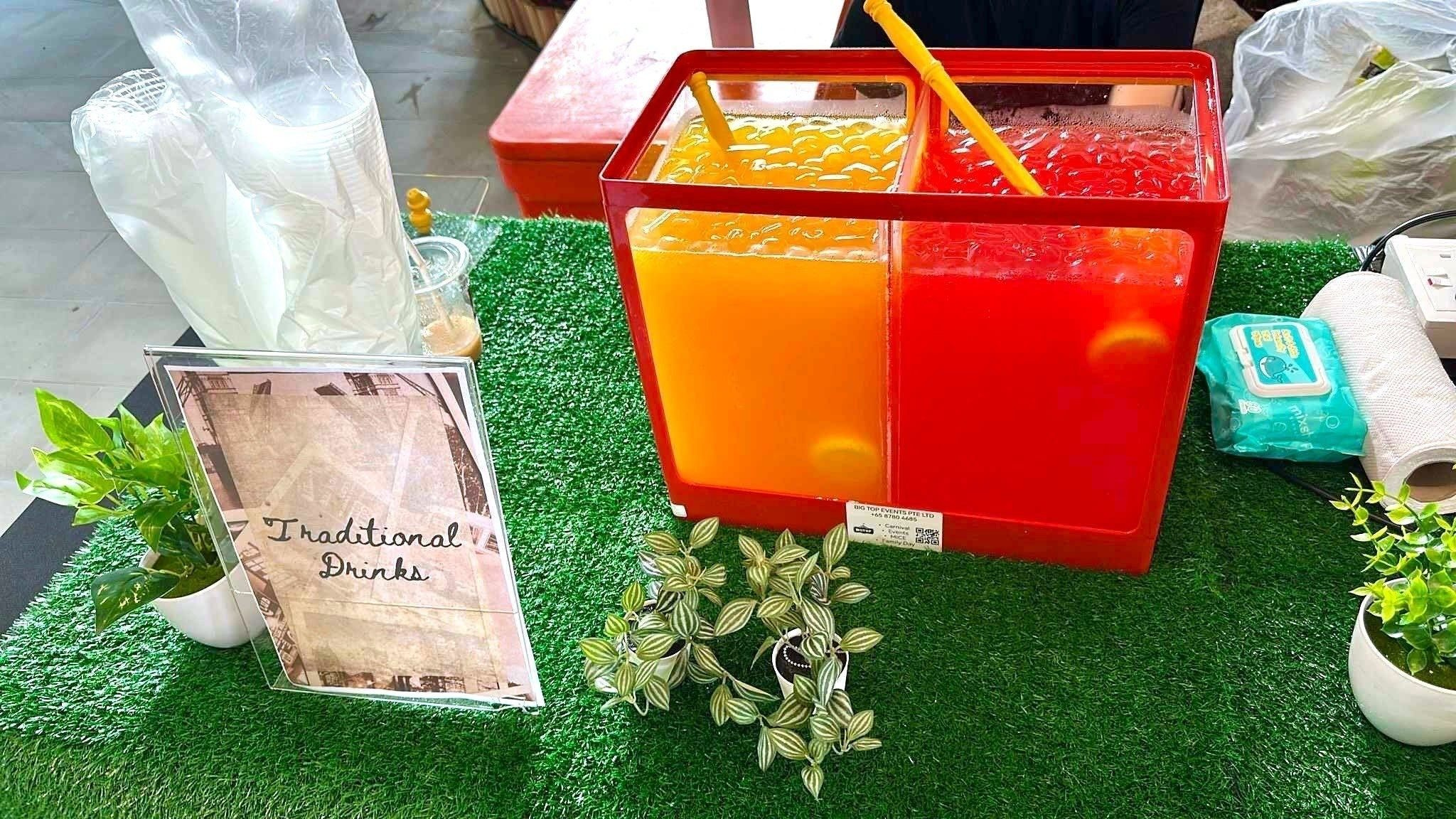
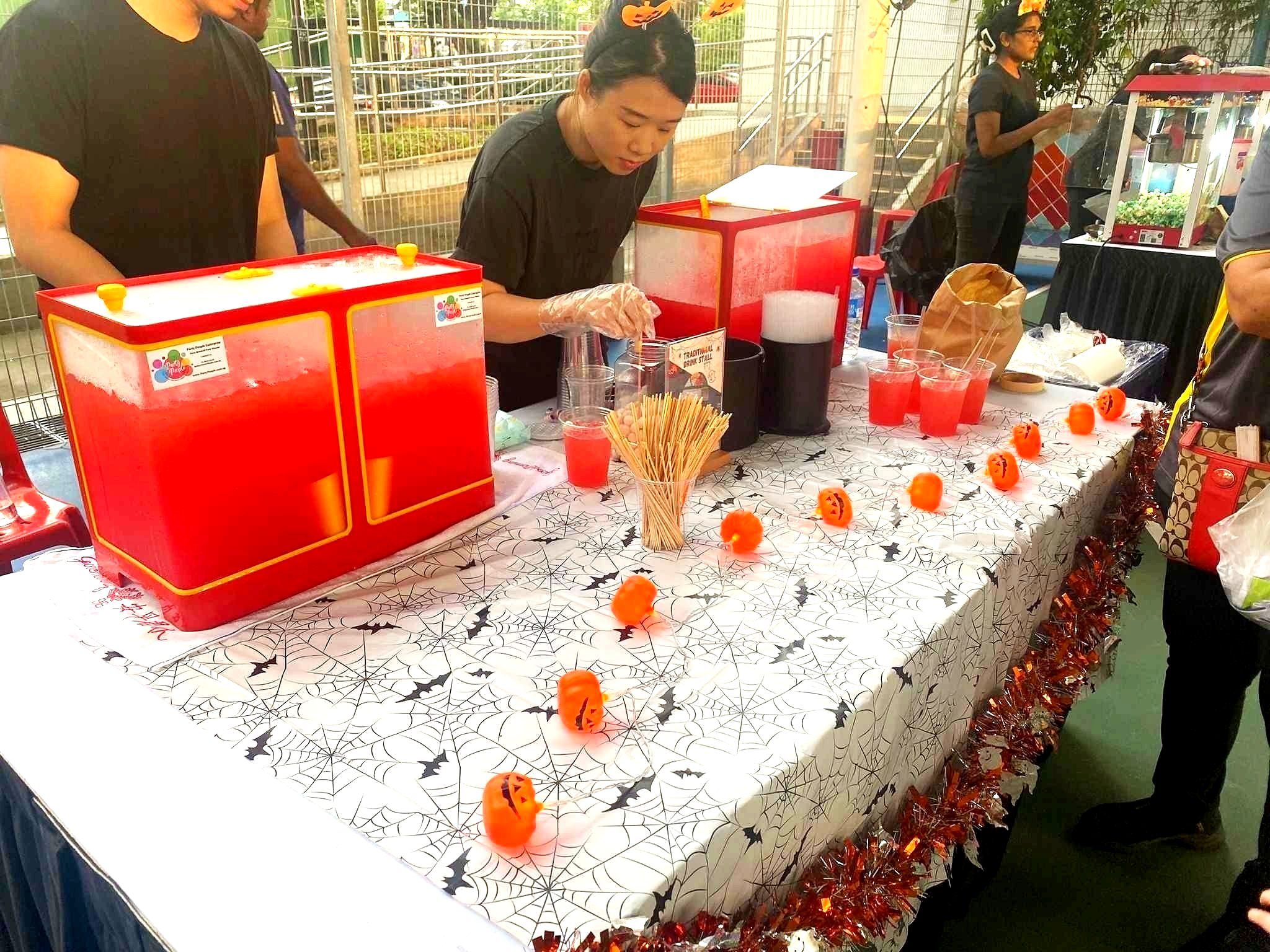
Cold dispensers make the beverage itself part of the display. Bright colours can attract attention, but colour is not a reliable description of flavour. Name each drink clearly and avoid making guests guess from its appearance. If one container holds a fruit-based drink and another holds a different recipe, the labels should explain that distinction. Confirm the recipe and ingredient information with the caterer before producing signs, especially when a creative event name is used alongside the ordinary drink name.
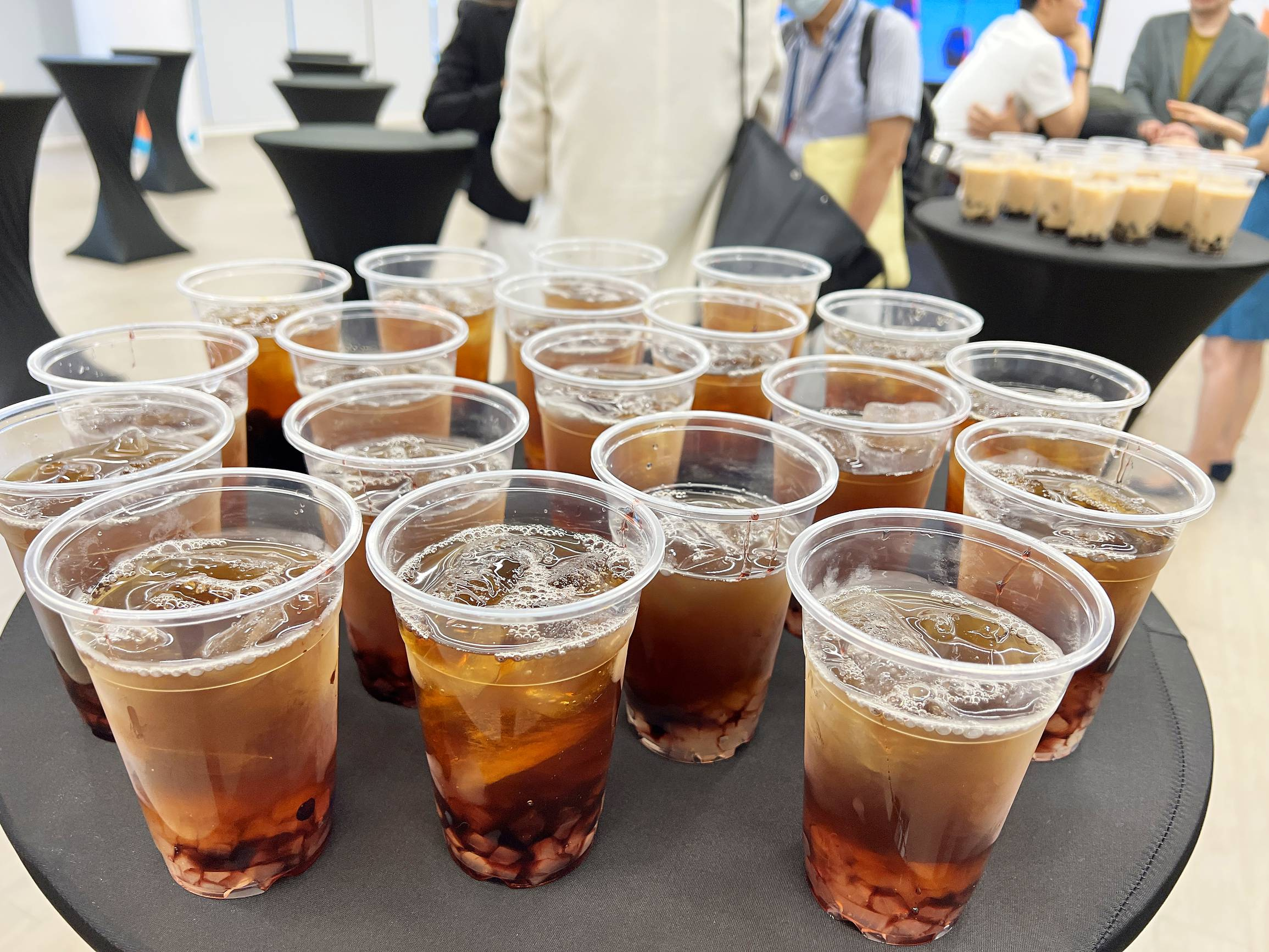
Pre-poured cups create another presentation style. The fruit-tea example shows individual servings arranged on a table, with visible ingredients at the bottom of the cups. This can make the finished drink easy to understand. It also changes the service discussion: ask how drinks are replenished, how the intended temperature is maintained and whether the visible presentation matches the booked recipe. Do not infer the exact ingredients from a photograph alone. A clear menu and an operator who knows the agreed recipe are more useful than an elaborate name without an explanation.
A theme should frame the drink rather than hide it
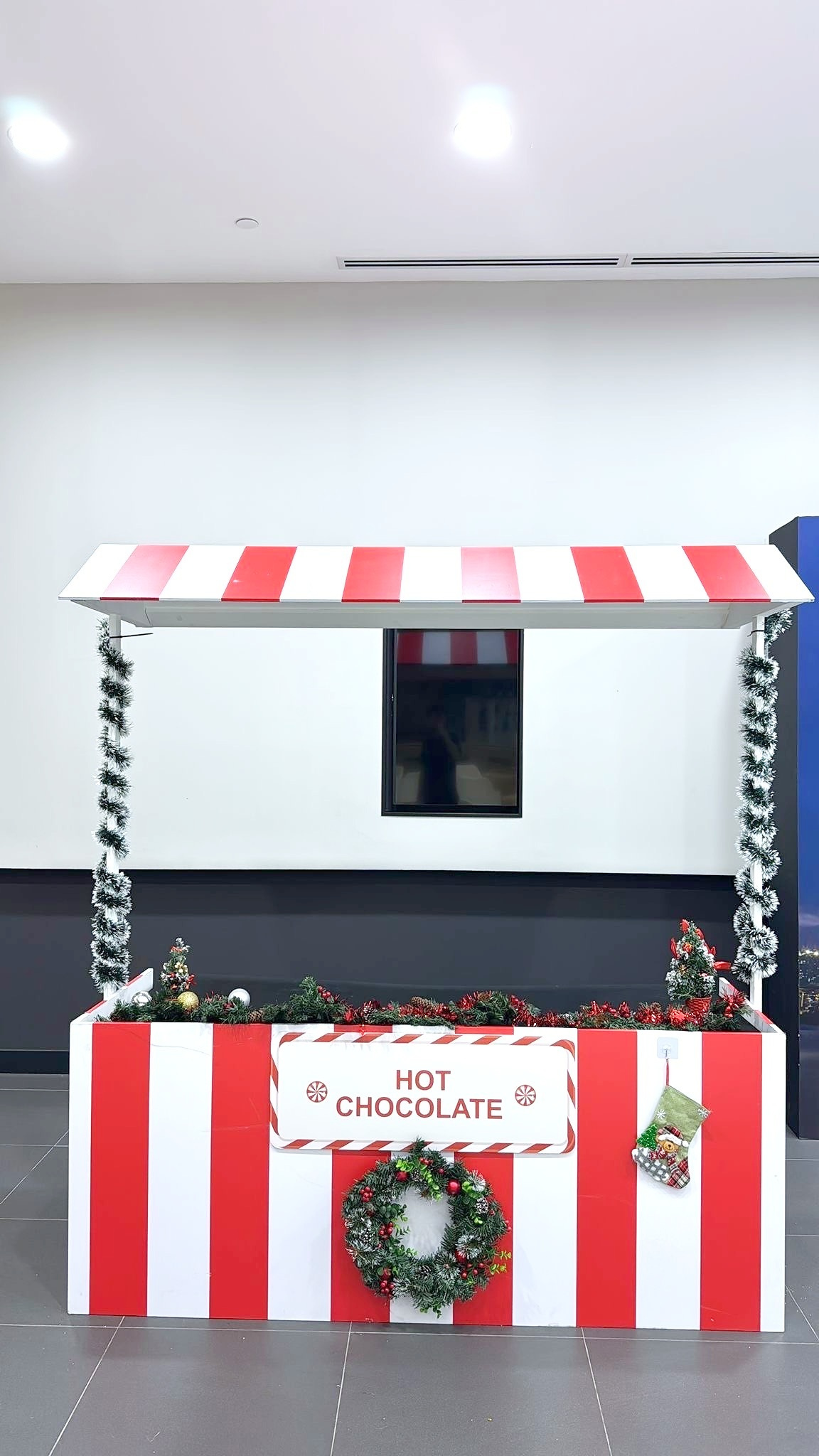
The Halloween counter uses red drinks, a patterned cloth and small decorations to establish the occasion. The equipment remains visible and the cups are still recognisable as the product being served. This is a useful principle for other themes too. A Christmas stall can use striped panels and greenery; a retail activation can coordinate the counter with the surrounding brand display. The decoration should help guests understand where to get a drink, rather than obscuring the working surface or covering the menu.
Keep the distinction between inspiration and inclusions clear. A photograph may show a custom counter, branded panels or decorative accessories that are separate from the standard drink service. When requesting a similar look, identify the parts that matter to you. Ask which elements are included and which would require a separate design or rental arrangement. This makes it easier to compare proposals without assuming that every prop in a previous event photograph automatically comes with the beverage package.
Compare counters, cups and themed stalls
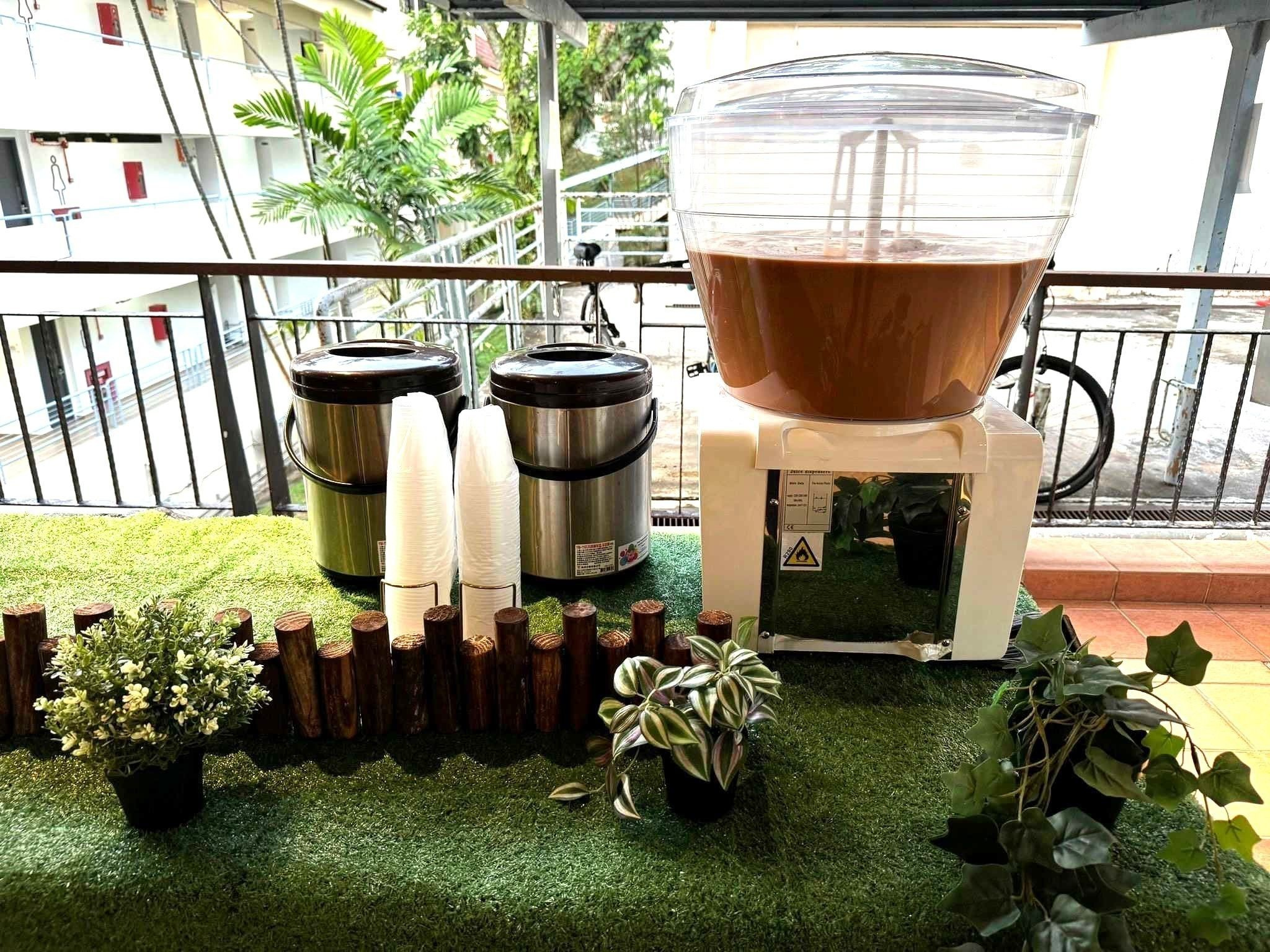
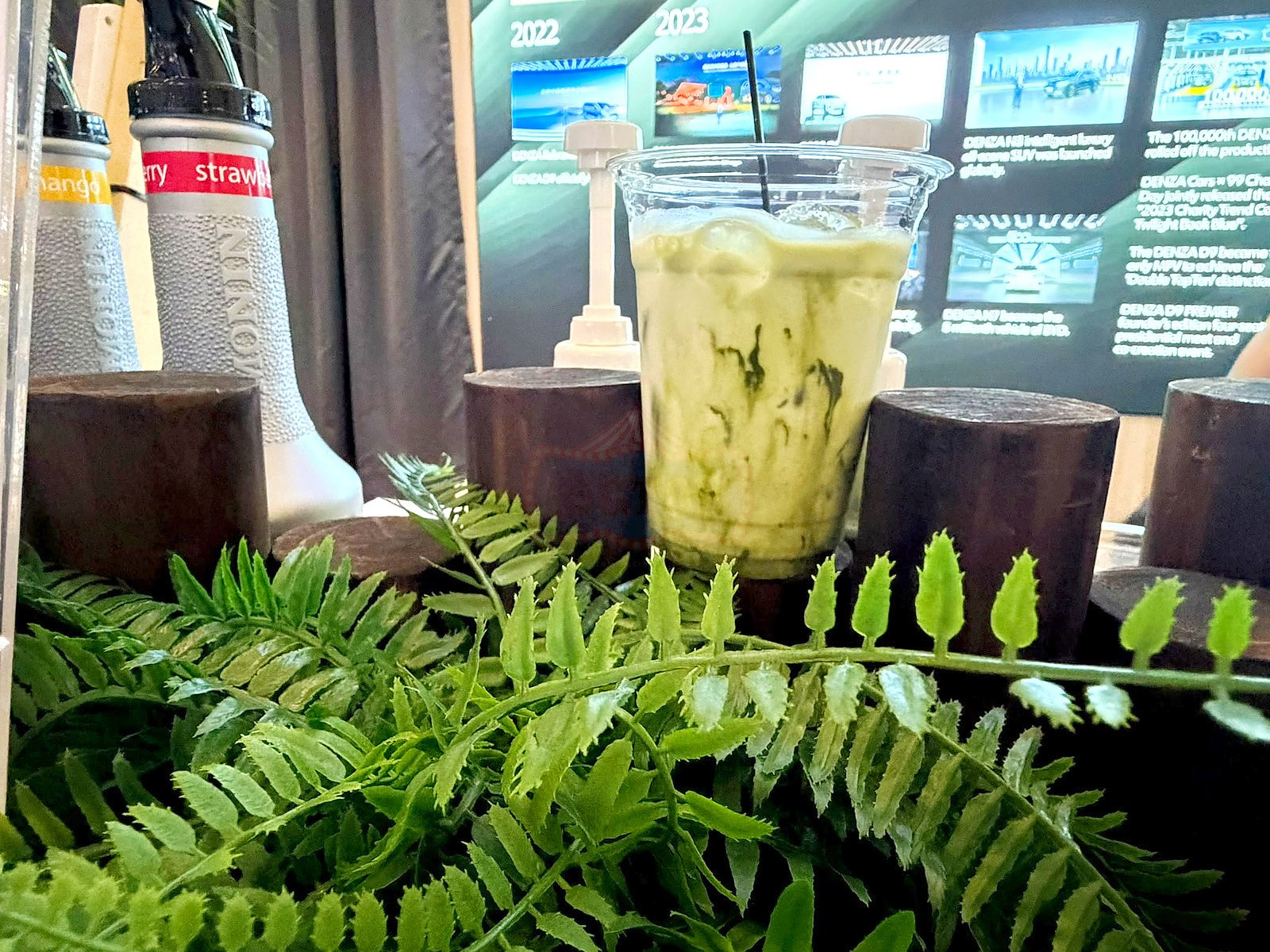
The first gallery row shows different ways to present the drink itself: a dispenser arrangement, an iced matcha cup and a branded hot-chocolate setting. The second row shows taller counter and stall treatments. These examples are useful for discussing the character of the service, from a decorative seasonal stall to a compact coffee cart. The right choice depends on whether the drink preparation, the finished cup or the themed display should be the main attraction.
Turn the preferred format into a clear enquiry
Start with one primary serving format and a short menu. State whether you want made-to-order coffee, an urn-based hot beverage service, cold dispensers or a combination. Then identify the finishing details: serving size, milk choices, toppings, drink labels and any custom counter graphics. Ask for the required equipment connections and the operator arrangement for that specific proposal. Those details should come from the supplier rather than being estimated from the size of a machine in a photograph.
Big Top’s live coffee bar station offers another relevant example of an event coffee format. Compare references by the guest experience they demonstrate, then confirm your own menu and inclusions with Live Stations. Thoughtfully chosen Drink Stations do more than offer refreshment: they give guests a clear choice, a recognisable service point and a finished cup that fits the occasion.