A heritage tasting table is about contrasts: the coloured layers of kueh lapis, a crisp kueh pie tee shell, a warm tutu kueh and a chewy bite of muah chee. Traditional Snacks give an event menu a local identity without asking every guest to choose the same dessert. The photographs in this article show both the food and the counters behind it, so you can decide which dishes deserve a staffed station and which suit a display.
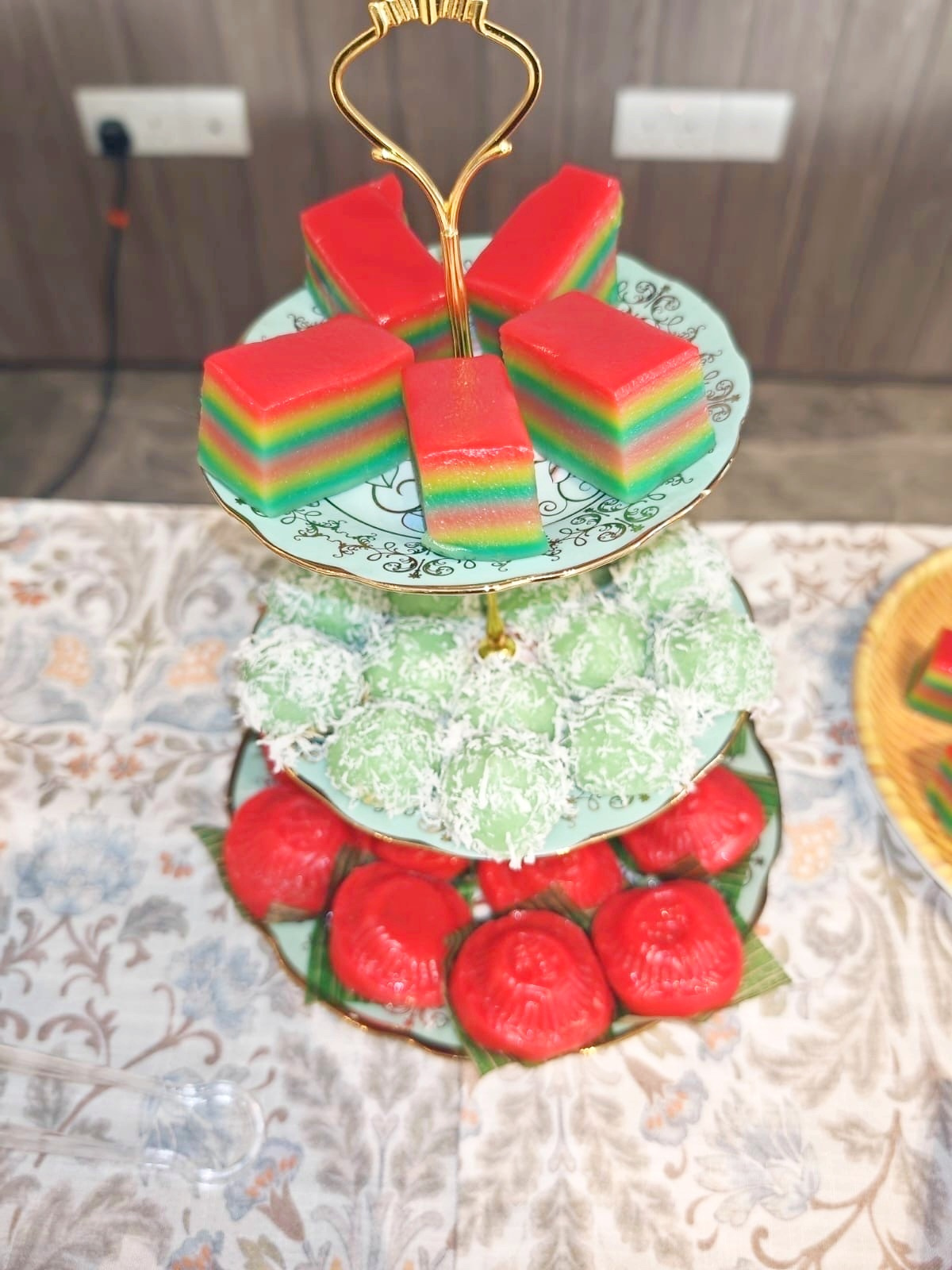
Traditional Snacks: a heritage menu guests can explore
Imagine a company afternoon tea built around local favourites. Start the conversation with a visible kueh display, then offer a warm item at a separate collection point. Kueh pie tee contributes crunch, while muah chee offers a different texture; kacang puteh can provide a small portion guests carry back to their colleagues. This is a proposed menu arrangement, not a record of one photographed event or a fixed package.
The useful decision is how much preparation guests should see. A colourful ready-prepared display does a different job from individual assembly or steaming. Ask for a menu that states the dish, serving format and quantity for each element. That makes it possible to compare quotations without confusing a full live station with a tray of snacks.
A display of ready-prepared kueh and a station that assembles food on site provide different experiences. Include that distinction in the brief so the proposal reflects what guests will actually see. You can explore a kueh and traditional snack tasting service when considering a colourful display-led option.
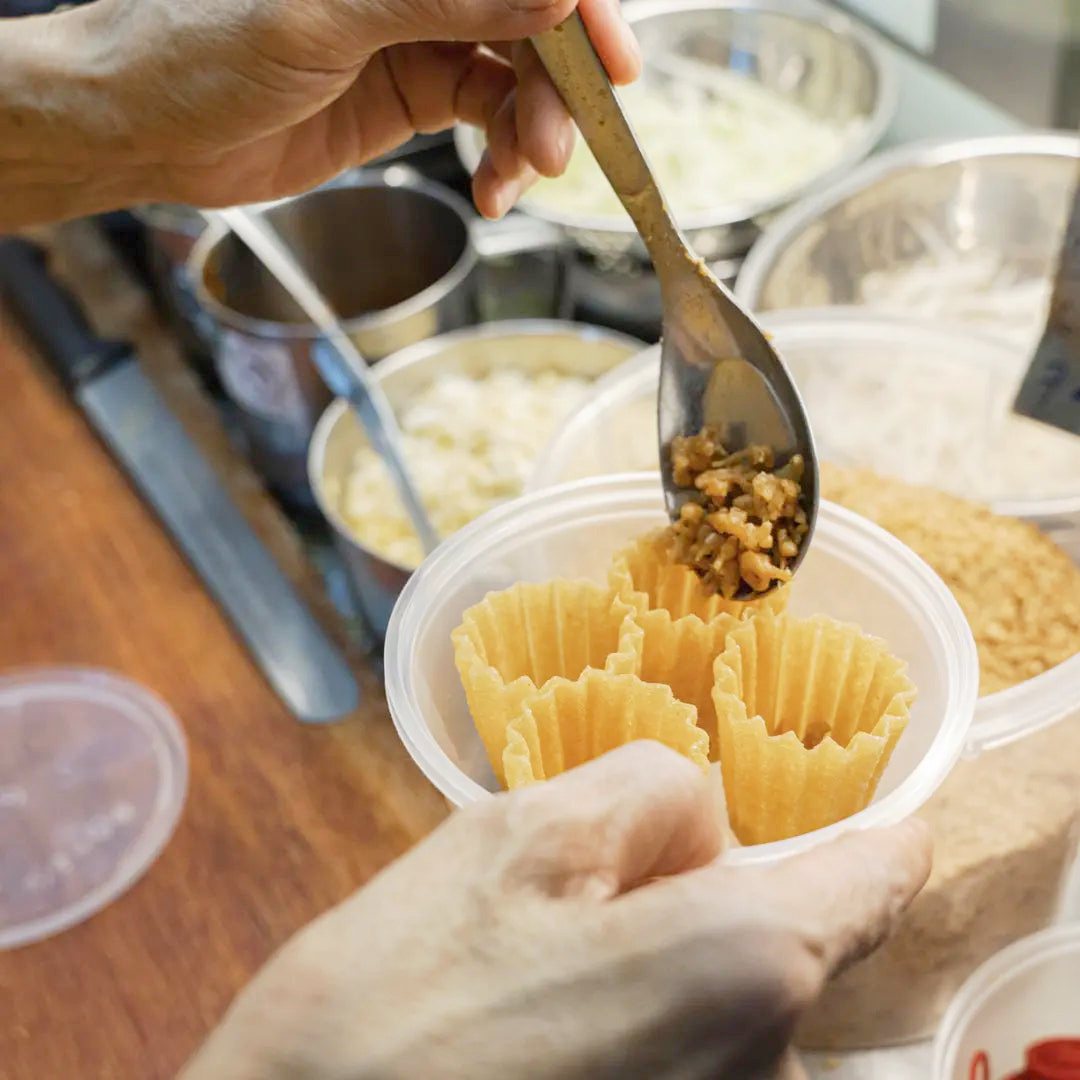
Add a crisp bite with kueh pie tee
Kueh pie tee introduces a different texture to a menu of soft and steamed snacks. The preparation photograph shows small cups being filled individually. That assembly stage can become part of the guest experience, giving people a reason to pause and watch their snack take shape before receiving it.
Rather than placing this station wherever a spare table fits, consider where the queue will form and how the team will work behind the counter. A clear ordering or collection point helps guests understand the process. Discuss portion quantities and service timing with the supplier, particularly if everyone will take a break at once. The kueh pie tee live station page provides a relevant starting point for a request about on-site assembly.
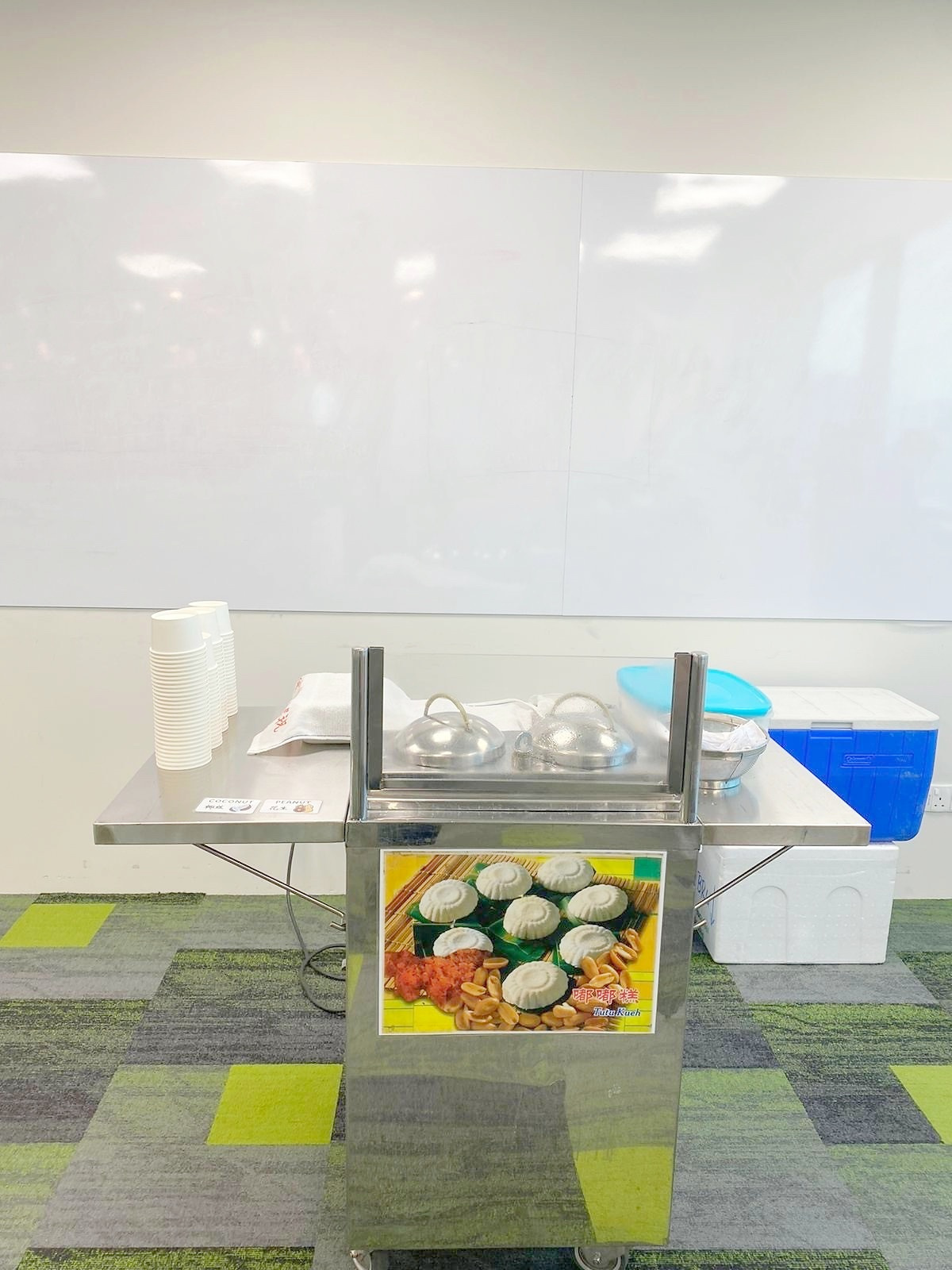
Give steamed tutu kueh its own spot
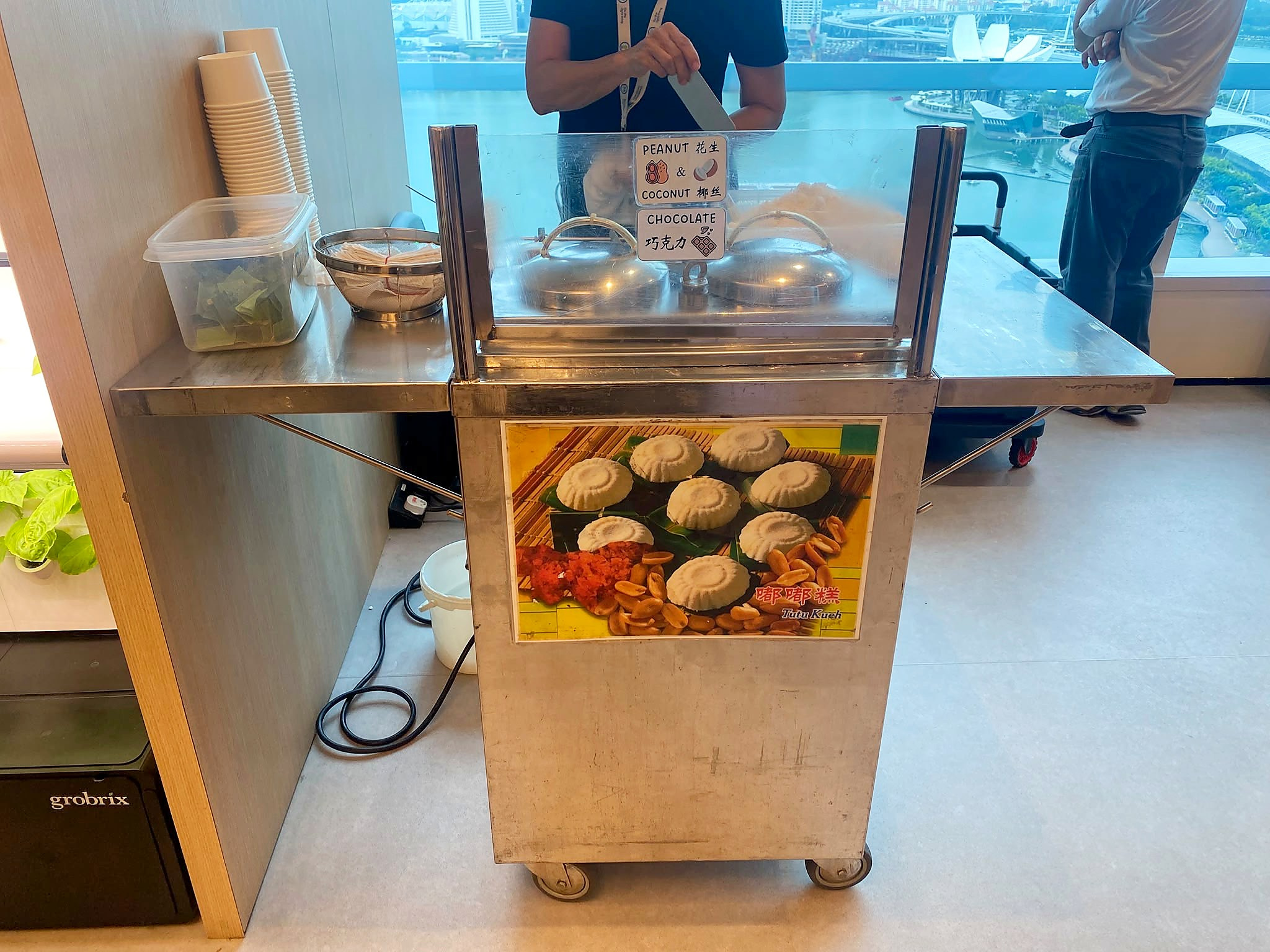
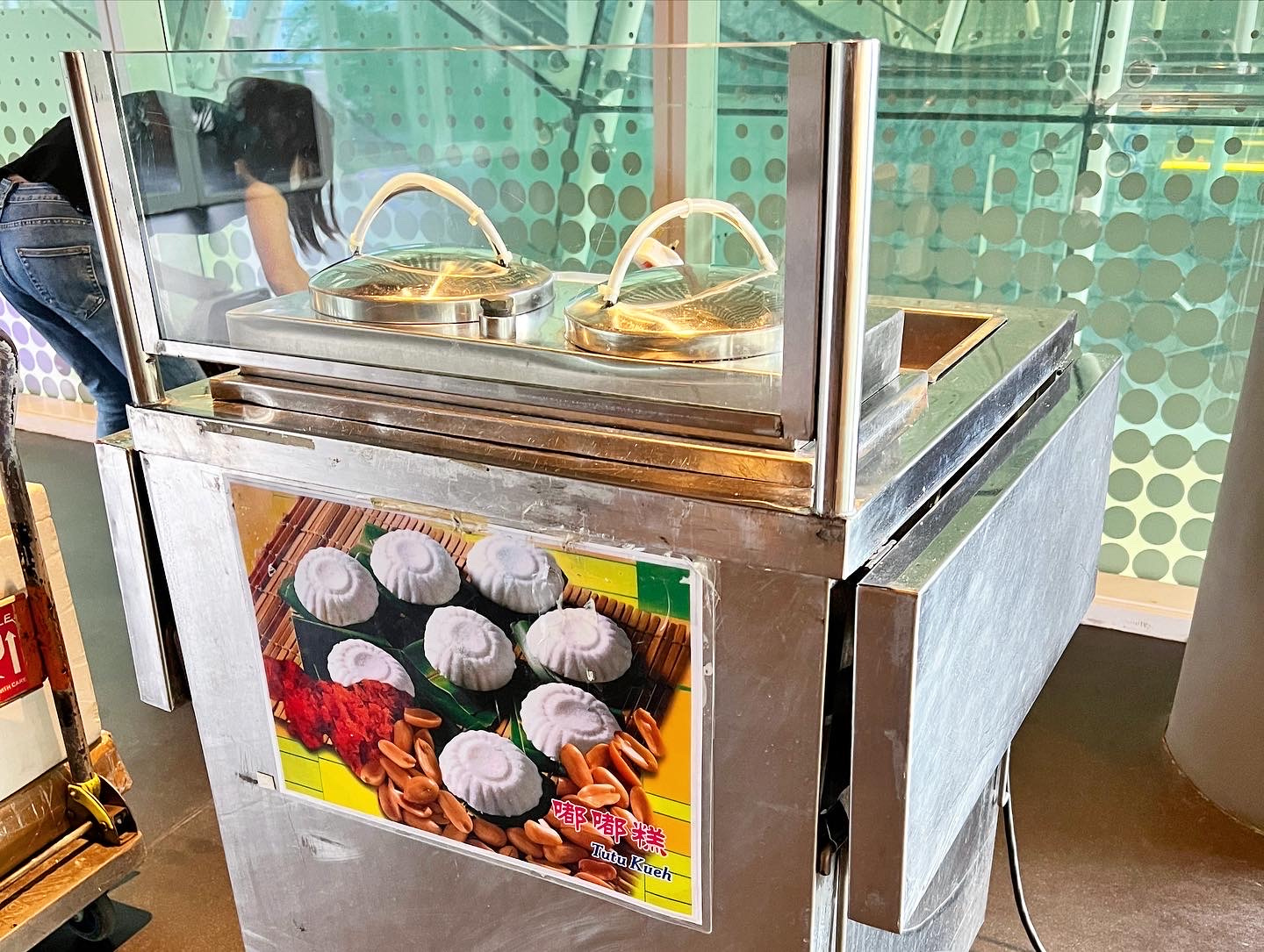
A tutu kueh cart can introduce a recognisable traditional element to an office or indoor celebration. The photographed setup uses a dedicated counter and a prominent sign, which makes the station easy to identify. Its simple presentation can work well alongside other refreshments without needing a large themed installation around it.
Steamed snacks have their own preparation rhythm. Ask how the planned guest count and serving window will affect the station arrangement, then allow a sensible waiting area in the layout. Confirm the available fillings rather than assuming every option shown in a photograph is included. A short, readable menu is more useful than lengthy signage when guests are choosing during a busy break.
Include the venue’s access and utility information in your enquiry. The catering team can then assess the setup requirements for the actual equipment. Browse the tutu kueh live station details and share a photograph of the intended position when asking for a proposal.
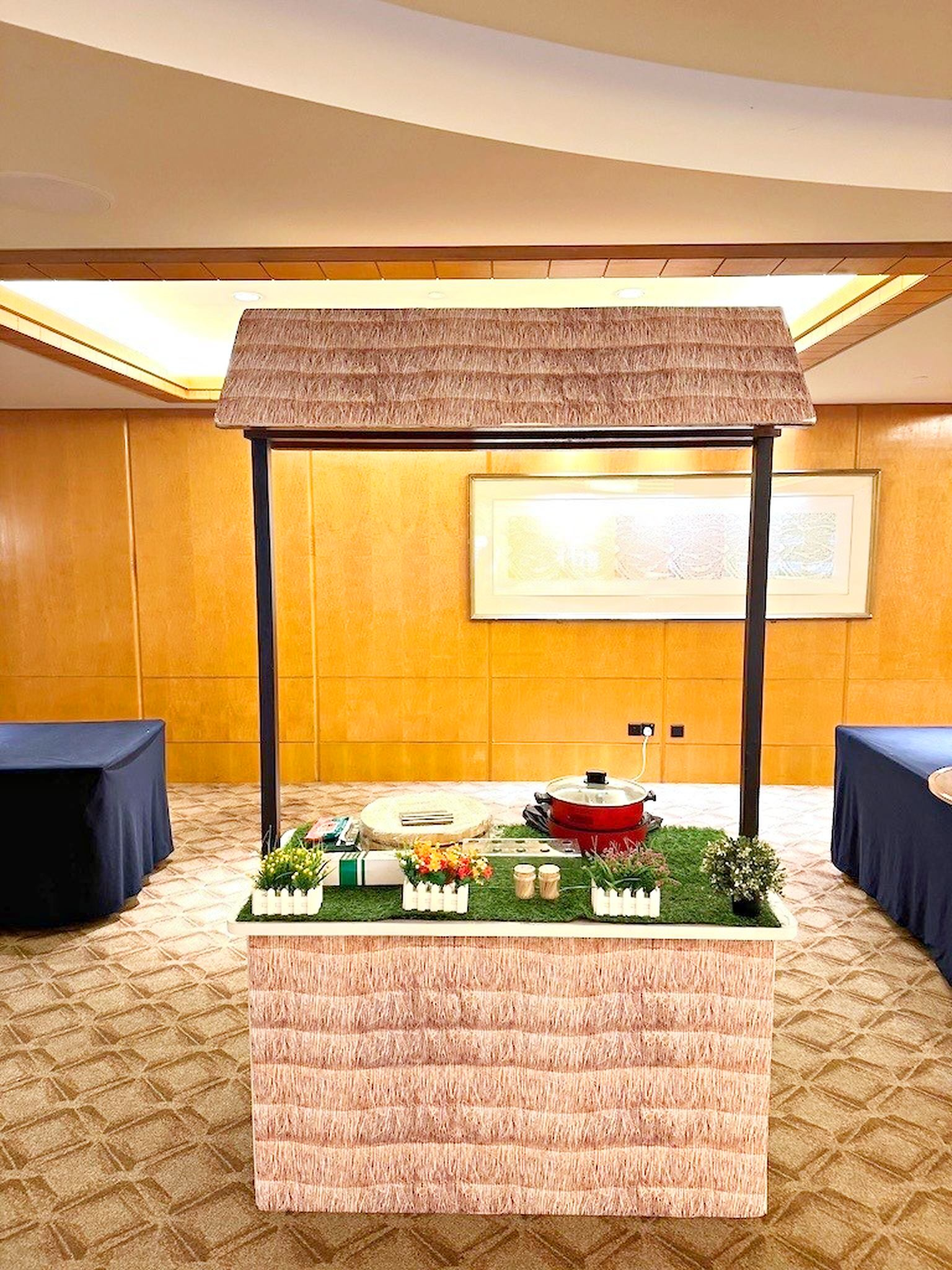
Use a muah chee counter to shape the atmosphere
The thatched-style muah chee counter below shows how the station itself can help establish the event’s look. It provides a more distinctive visual presence than a plain serving table. For a nostalgic celebration, this kind of presentation can give the refreshments area an identity that connects with the wider programme.
Decide how much emphasis you want to place on the counter styling. An office gathering may call for a straightforward service area, while a themed event might benefit from a more decorative frontage. Confirm the actual counter included in the quotation, along with the space needed for preparation and serving. Photographs from previous events are helpful references, but they should not replace a clear description of the booked setup.
Discuss coatings and portions before printing the menu
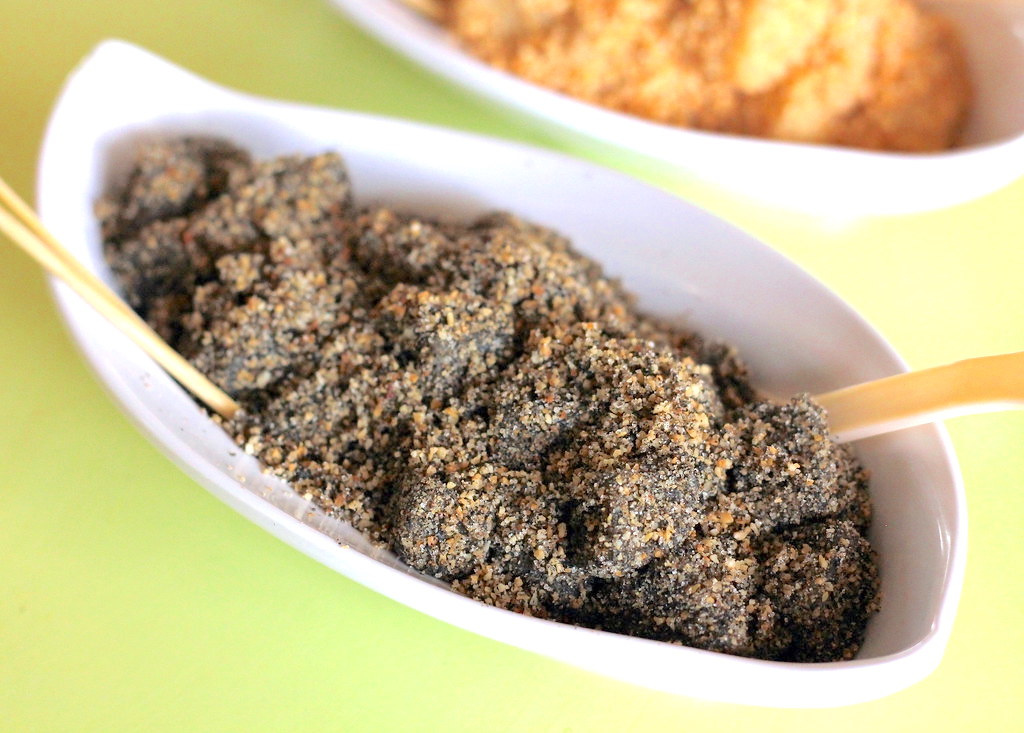
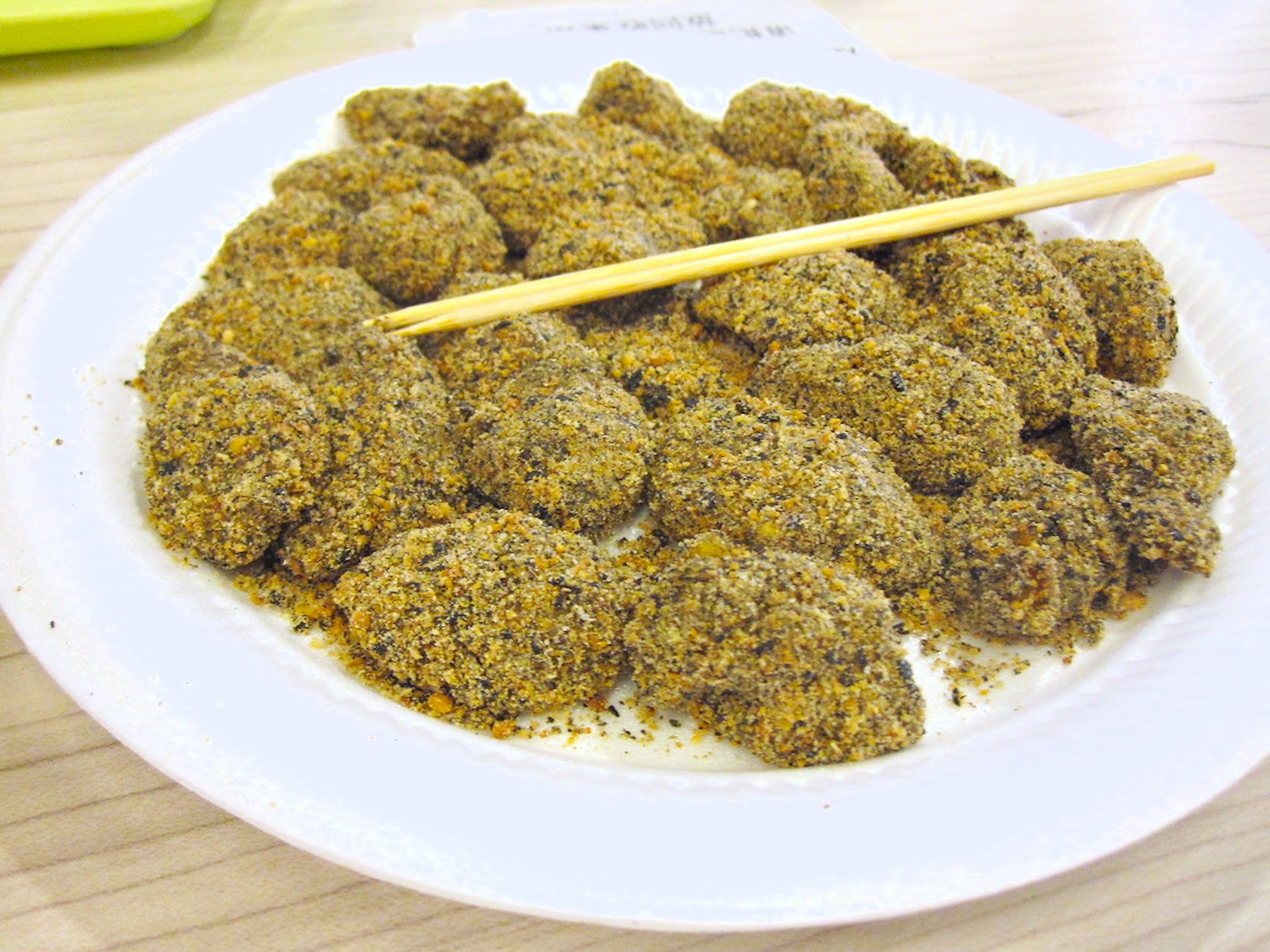
Muah chee can look quite different depending on its coating and presentation. The dark sesame-coated pieces in the bowl below are a useful reminder to be specific when describing the snack you want. A general dish name alone may not communicate the exact option that attracted your attention.
Ask the team to confirm the ingredients and available versions for your booking. If guests need ingredient information, arrange accurate labels based on the confirmed menu. Do not infer suitability from a photograph or from the appearance of a coating. The same practical approach applies to portion size: agree what one serving means, especially when several small snacks are being combined into a tasting experience.
A muah chee live station can be discussed as one element of that combination. Explain whether you want it to be the main snack or one of several choices, so the proposed quantities match the role it will play.
Finish with an easy-to-browse kacang puteh selection
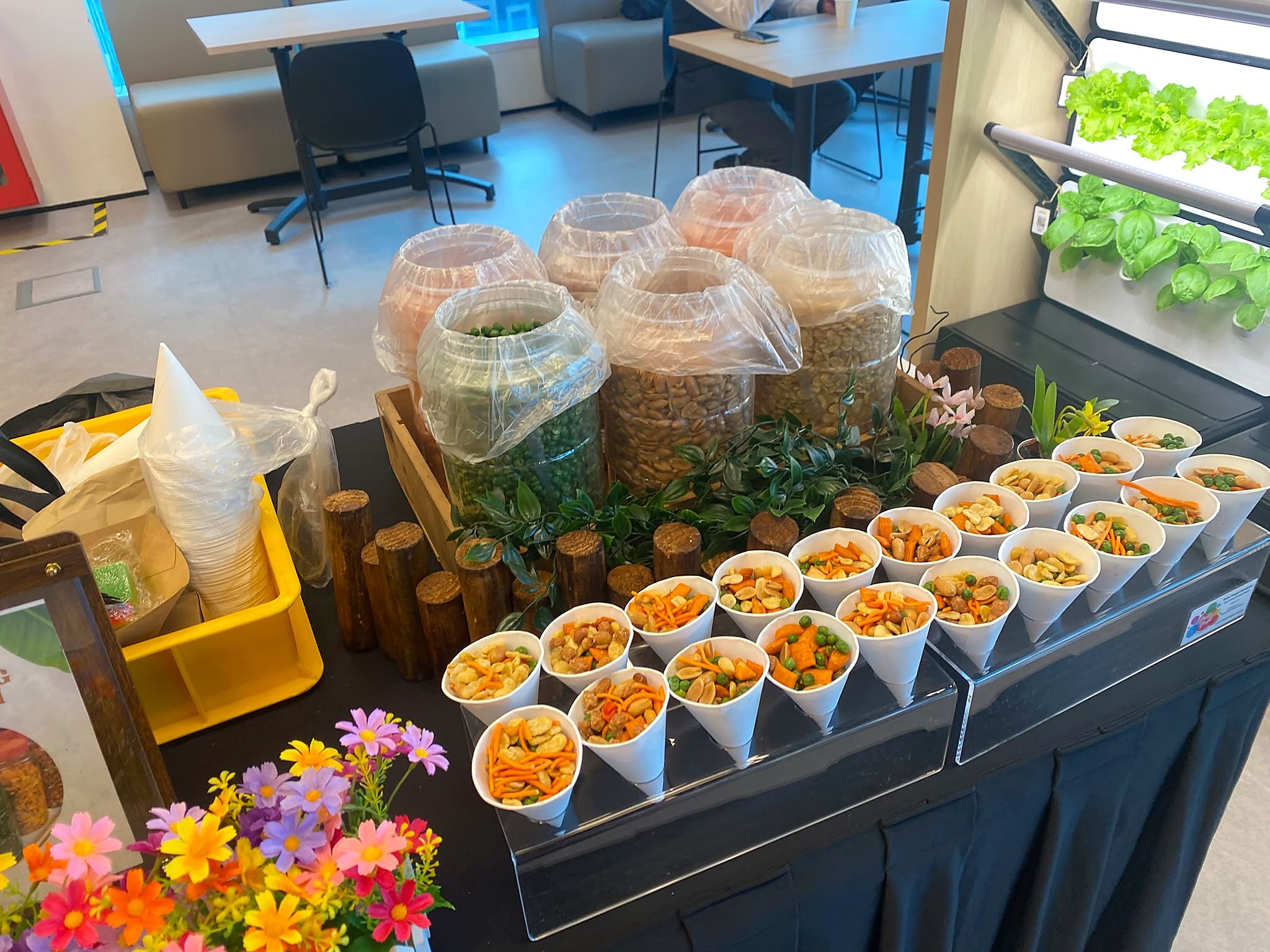
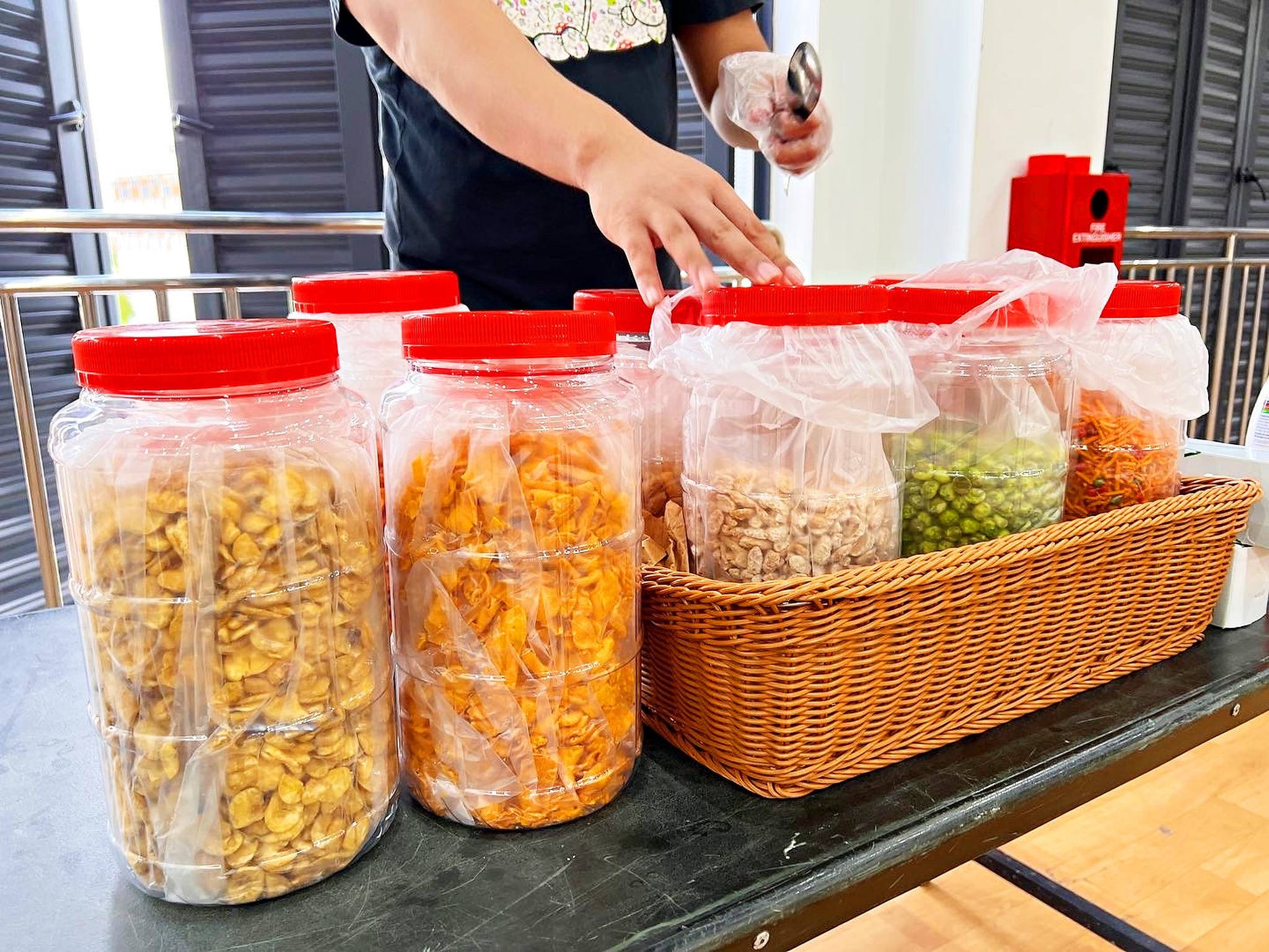
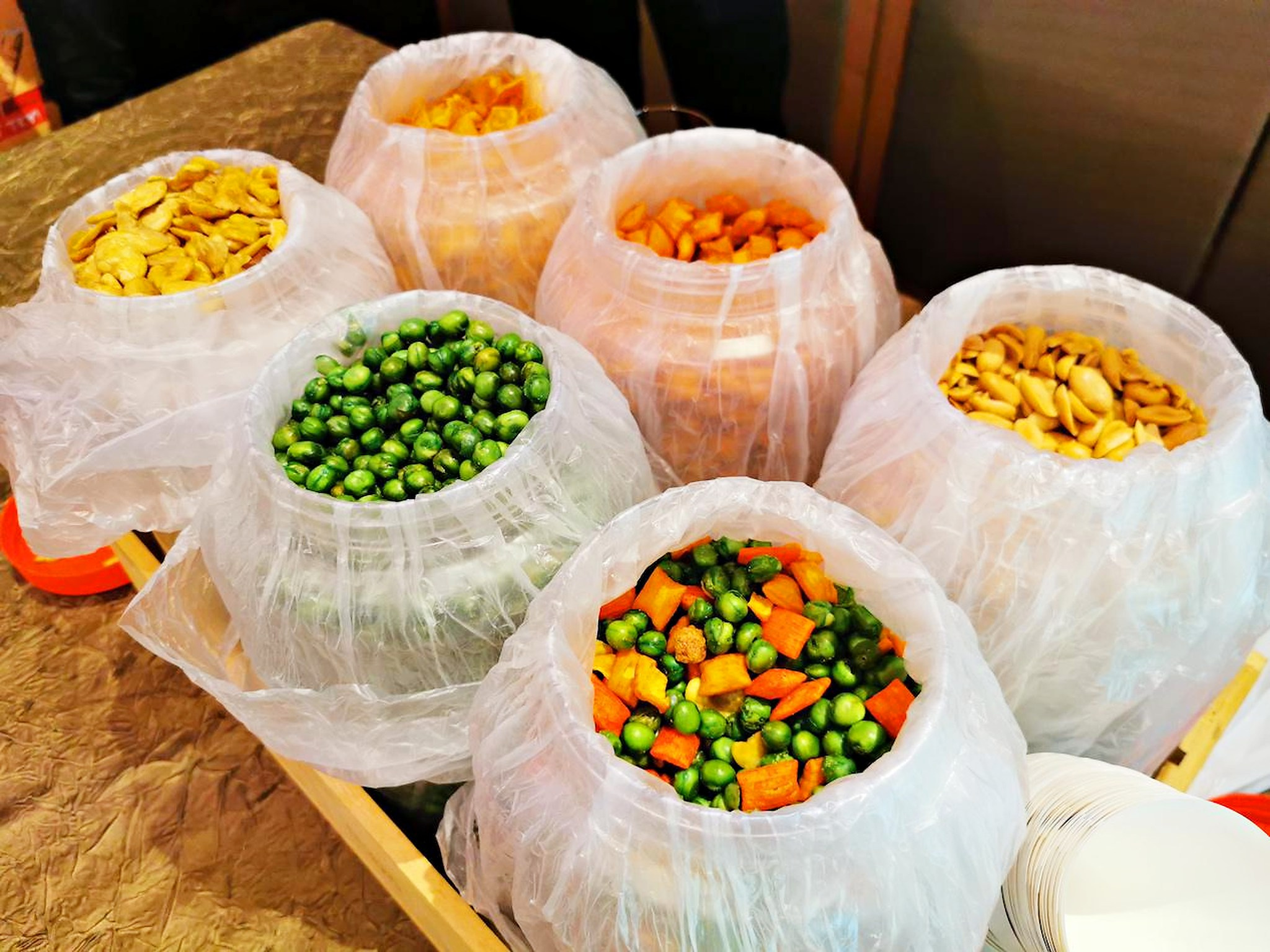
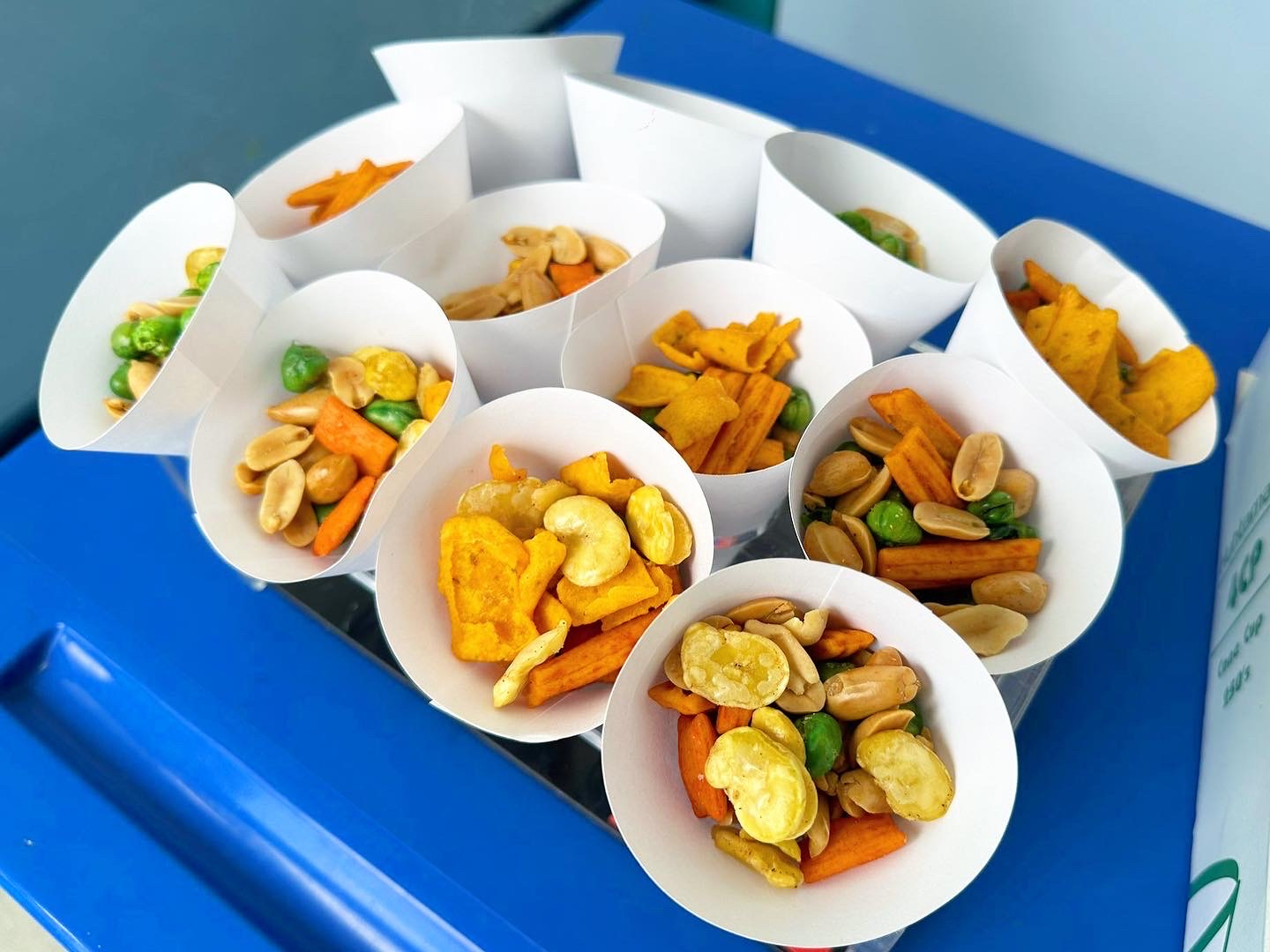
A kacang puteh counter adds another serving style to the tasting corner. Jars, baskets and individual portions can make the selection visually clear, as the setup below demonstrates. The different colours and shapes of the snacks also give the display interest without needing elaborate decorative additions.
Choose a serving arrangement that suits the flow of the event. Discuss whether guests will select from a staffed counter or receive prepared portions, and confirm the snack assortment. If the event includes a short refreshment break, a simple collection point may be more useful than a long menu. Keep the display within easy reach of the serving team so replenishment does not interrupt the guest route.
Compare the food details and serving formats
The first gallery row brings together tutu kueh preparation and a plated muah chee example. The second focuses on kacang puteh jars, snack varieties and paper cones. These closer views help translate a broad idea into a practical brief: what should guests see, how will they receive their portion, and which presentation style fits the celebration?
Build a tasting corner around your guests
Start with a manageable combination rather than trying to include every traditional favourite. Consider the balance of textures, the space available and whether guests will eat while standing or seated. Share the event date, location, expected attendance and serving period with the catering team. Include photographs of the proposed area and any venue requirements already provided by its management.
Traditional Snacks work best as part of a clear event plan. With an agreed menu, identifiable stations and a sensible serving route, a refreshment corner can feel welcoming and easy to explore. Use the examples here to explain your preferred dishes and presentation, then ask Live Stations to develop a suitable combination for your Singapore event.